
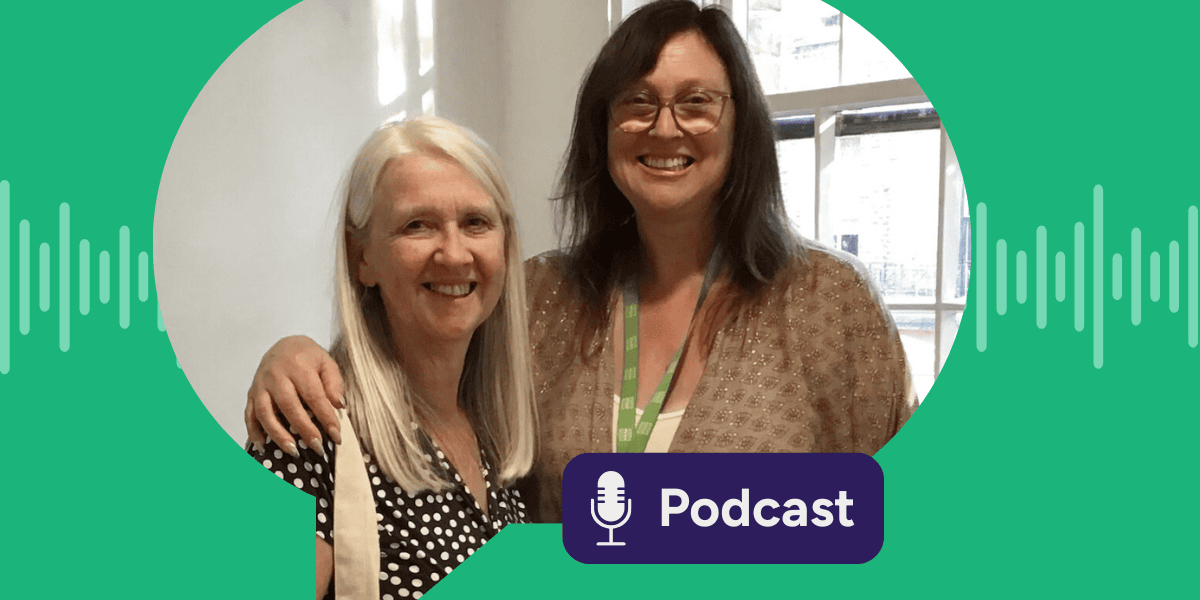
Podcast: London Irish Centre’s Quality Award Journey with Caroline Hanks
6th November 2025
In this podcast, Sandra chats to Caroline Hanks, Befriending Coordinator at London Irish Centre, which has served the Irish community in London since it was first established in 1955. In July 2025, their befriending service achieved the Quality in Befriending Excellence Award. They discuss the process for achieving the Quality Award, with some top tips and advice for completing the assessment. A great listen for anyone considering applying for the Quality Award.
Listen
Sandra
Today we’re talking to Caroline Hanks, Befriending Coordinator at the London Irish Centre. She’ll be chatting to us about their journey with the Quality in Befriending Excellence Award. Hi, Caroline!
Caroline
Hi Sandra!
Sandra
Hi. Can you tell us a bit more about the befriending service at the London Irish and your role there?
Caroline
Yeah, of course. Thank you so much for this opportunity. So the befriending service at the London Irish Centre is targeted at those over 55 in the community who are experiencing loneliness or isolation. Those can be either Irish born, of Irish heritage or with a family connection to Ireland, and this is all pan-London. We offered a blended approach, so we offer telephone befriending and in-person befriending or a blend of those two, depending on the client’s circumstances.
Sandra
That’s brilliant, thank you. And you’ve been with the London Irish Centre since 2017. How did you get into the world of befriending?
Caroline
Okay, so I started off actually in the mentoring world. So I’ve worked for quite a lot of organisations with kind of mentoring programmes. And one of the sectors I was working in, they asked me to pilot a befriending scheme. So that I did, and it was really successful and we ended up running mentoring and befriending alongside each other. And that was for like a homeless organisation. And I guess the rest is history.
Sandra
It is, yeah. So that’s quite a long time you’ve been with them. How would you say the befriending service at London Irish has changed over these years that you’ve been there?
Caroline
So when I began, I think historically, kind of really informal befriending was happening within the community of the London Irish Centre. You know, everybody’s sort of helping each other out and that kind of like informal kind of, you know, helping with groceries, et cetera, if needed, and just everyone’s sort of just lending a hand. And when I began, it was in a formal kind of structure, but it was sitting within the whole volunteering programme. So I think the role they advertised, which I, went for and have now been in post, was to look at bringing the befriending service out as a standalone service. So that’s quite a big change from it being informal to then sitting within volunteering to then, now how it is a standalone service. And we started off as in person. And with the pandemic, we flipped that to telephone befriending. And now, as I said earlier, we’re now running a blended approach. So yeah, there’s been a few changes, but you know, it’s all been kind of pretty much based on how, kind of, an informal kind of approach to, you know, helping out the community sort of there was a need then for befriending.
Sandra
Thank you. That’s, yeah, lots of changes. It’s been interesting to see some of the changes while I’ve been here. And would you say there are any unique challenges that the Irish community in London face around loneliness and social isolation?
Caroline
So a lot of Irish came over in the 50s and 60s to London to get work. And there was huge Irish communities in different pockets of different areas of London, predominantly North West and North London, where the Irish Centre actually is situated here in Camden in North London. So I guess when I look back at what I’ve just said about the informal kind of befriending, that it would have been those communities for those people. They would have had people drop in on them. They would have been, you know, people, you know, making sure that they were okay or just, you know, socialising together and there’d be quite a lot of Irish pubs and Irish connections with shops and things. So over the years, a lot of people may have moved home. Unfortunately, with the age group of those that came over, there might have been some people that have already died. And so those communities just aren’t there anymore, unfortunately. So that would have led to more kind of loneliness and isolation, especially around the cultural aspect. So I think that’s particularly hard for our client group.
Sandra
Thank you for that. So the London Irish Centre has been Quality Award holders since 2019 and this year achieved their Excellence Award with 100% green indicators. So congratulations for that.
Caroline
Thank you.
Sandra
Can you talk us through the process you went through for your Quality Award re-accreditation this year?
Caroline
So basically we worked through the 15 standard re-accreditation indicators, which were pretty much kind of policies and procedures and quite a lot of the original Quality Award areas, but not, the full areas again. So there’s, 15 standard awards in re-accreditation, sorry, indicators. And, you know, that included setting up interviews with the clients and with the befrienders and also other areas as well, as I said, from the original accreditation. So it was a shorter process than going for the original because it is a re-accreditation, but it was revisiting some of those areas and recapping, which was really, really helpful for us as an organisation and as a service.
Sandra
Excellent. Yeah, I know, there’s a lot of work involved in doing the re-accreditation. While you were doing that process, did it highlight any successes that you were particularly proud of?
Caroline
Yeah, well, it did actually. Yeah, I was just kind of like reflecting on sort of how well prepared the befrienders and clients are going into the service. You know, everyone knowing the boundaries and the expectations from the outsets with things like agreements, for example, which helps things go smoothly, you know, as smooth as possible from the outset. And like I said previously, talking about kind of informal versus formal. It formalises it in a nice structure, but it doesn’t take away the, you know, the lovely connection that the befrienders and clients have. But yeah, I think it really highlighted the robust framework really that we’ve got, which, you know, we’re very proud of as a service.
Sandra
And did it give you any new insights into your service?
Caroline
Yeah, so, we looked into the development of a newsletter. We go on to talk about the Excellence part of the award a bit later, but we… We thought that because the clients were quite isolated in the community and because they’re not able to come into the great events that we have here at the Irish Centre, even though they have a befriender, they probably don’t realise that they’re part of a group of befriending clients and part of the service. So, producing the newsletter with our wonderful admin volunteer really helped, I think, connect the dots for a lot of the clients that they are part of a programme, even though they have a one-to-one visit, they’re part of a group. And I think it’s really helped the clients feel kind of quite confident then if we are to gather to have some sort of socials that they feel more confident in coming because they feel more part of it. That was kind of a new insight that we hadn’t thought of before. So that’s been really, really beneficial.
Sandra
Thank you for that. And Caroline, you’re the only befriending coordinator at London Irish. Do you have any tips for completing the award, just as a team of 1, doing it all by yourself?
Caroline
So firstly, there might only be one befriending coordinator, but there is a team and an organisation behind it. The LIC is not exclusive to befriending, it offers a range of other services and events. So we’re fortunate in that way to have an infrastructure such as HR, marketing and communications, which play a role in our organisational policies and social media communications. And alongside those and management, the team and of course the contributions from our befriends and clients, it’s all fed in. So although I was at the helm, it definitely was a team effort.
So my tips would be preparation. Preparation is key. Start as early as you can. Be methodical. Ask help from different teams where possible if you have that infrastructure. And just look at it as a kind of bite-sized chunks so then it doesn’t feel too much.
Sandra
Brilliant. Great tips. For this year’s accreditation, you decided to go for our highest award level, the Excellence Award. What made you decide to make the step up to Excellence?
Caroline
Okay, so for the Excellence, there’s an additional 23 indicators. And to be quite honest, reading through, we were pretty much doing most of them anyway. There was a few areas that we’d hoped to develop in the service. So it just really gave us that push to go for those changes in the service or those additions and to then, strive for the Excellence, which kind of made sense as well, like on our second re-accreditation to go for the higher award. And it was also kind of thinking creatively, kind of what you read, it could, mean one thing to one service or one thing to another. So on speaking to yourself, Sandra, who was overseeing our re-accreditation, I realised that it was really achievable because I hadn’t really looked at it from a lot of different angles. If there was an indicator, we weren’t sure of, discussing it with yourselves and Befriending Networks. we realised that we were already doing that, but just maybe in a slightly different form. So yeah, it made it really achievable.
Sandra
Oh, that’s good. And how did you find the process when you were doing this? Was it different from doing the previous accreditations?
Caroline
Yeah, as I said, there’s an additional 23 indicators. So they are drawn from the original award. So it’s revisiting those areas as well. And just, you know, a slight sort of step up from some of the ones that were in the original re-accreditation, really. So yeah, no, it worked really, really well.
Sandra
That’s great. So you’ve done your re-accreditation twice now. What value do you think having the Quality Award adds to your service?
Caroline
Okay, so it really shows confidence, I think, holds confidence for our beneficiaries, our clients, volunteers, partners and referrers, as well as, the London Irish Centre Board of Trustees and our funders that, you know, we run an efficient, robust and quality service. So it’s really great to have that quality stamp, that quality mark.
Sandra
And how do you make the most of being a Quality Award holder?
Caroline
It’s great to be able to put it into funding bids because, it just stands out hopefully from other organisations that, we have got that, level of excellence and quality. It’s great that you can put the logo on all of the marketing materials as well and, on the website. And like I said, that, really hopefully gives confidence in people that would like to access the service or refer to the service or, any of the volunteers that would like to come on board as well. So that’s how we really make the most of it. we shout about it, to be quite honest, and we’re very proud of it. And yeah, we hope that it shows that we’re a beacon of good practice. And yeah, that and we can share that with other organisations too.
Sandra
Yeah, that’s great. We love that you shout about it. So what advice would you give to people starting out on their Quality Award journey for the first time?
Caroline
As I mentioned previously, preparation, cut it down into sort of bite-sized chunks to be able to weave into, your usual working day and service delivery. Have a look at what you’re already doing and, you know, make sure that if you are already doing it, that you capture that evidence as, you know, pop it away in a folder and then, you know, you can mark that one indicator off. Because I pretty much with the Befriending Coordinator role, we’re doing this kind of thing every day. It’s just kind of like being mindful of what evidence we can show to evidence that’s part of our roles really. So, and yeah, lean on Befriending Networks. They’re absolutely great for support. other organisations as well that have maybe gone through it. But I think it’s just making it manageable really within your everyday work. And that is prep really. And as I said, breaking it down.
Sandra
Some great tips there for people who are considering doing the Award to make it manageable for them. So the London Irish Centre is, it’s in its 70th year this year. Do you think you could share with us some of the events you have done to celebrate it?
Caroline
Yes, certainly. So we’ve had an amazing tea dance for our 70th. We hold a tea dance a couple of times a year, but this one was particularly poignant being our 70th year. So a tea dance is a sit-down meal and lots of dancing afterwards to either a traditional band and other bands that come in as well, which is really important for the Irish community. When they moved over in the 50s and 60s, as I mentioned before, there was quite a few dance halls that they would all gather in that they would really enjoy. And that’s where they would do their socialising and meeting people as well. And, trip the light fantastic after a hard day’s work. So we can recapture that for them at our tea dances. And it’s a particularly really popular event. So we hosted over about 200 people recently. And yeah, it was super special. And it was so nice as well, because a lot of those service users have been here for many, many years. And also, we were fortunate that some of the befriending clients and their befrienders were able to join us as well. So yeah, it made it really special.
Sandra
That’s great! Anything else that you’re doing?
Caroline
Yeah, and we had our annual fundraiser, which is hosted by our patron, Dermot O’Leary. Dermot and Friends, that’s been recent as well. So there’s always lots of different artists that play and poetry and lots of different kind of cultural things as well as sort of DJ and a party afterwards. So that’s been recently rolled out as part of the 70th celebrations and our 70th birthday is actually on the 27th of September. So.
Sandra
That’s great. Sounds like great events there. I’m sure everybody really enjoyed them. So what’s the next for the befriending service at the London Irish Centre? What’s new for you?
Caroline
So really it’s expansion of the service. We are pan-London and we’d like to reach more of those in need in the community. So yeah, it’d be great to be able to expand, to be able to have the capacity to reach more people.
Sandra
That’s great. Well, thank you so much for chatting with us today, Caroline. It’s been great to hear your insights about the Quality Award and also hear about the wonderful celebrations that you’ve had this year as well. So if people want to know more about the London Irish Centre, where can they find out more information?
Caroline
Okay, so it’s best for me to signpost them to our website, which is londonirishcentre.org.
Sandra
Brilliant. Thank you.

This podcast is part of Befriending Week (1 – 7 November), the annual campaign to raise awareness about befriending and celebrate social connection. Find out more on our Befriending Week microsite.