
A Spotlight on Group Befriending and Social Connection
3rd March 2026

Our Membership Development Manager, Nicola, explores how group befriending can offer exciting new experiences while also increasing the capacity of befriending projects. With contributions from our members at Together.ly, St Martin’s Centre, Bright Futures and b:friend.
As we see a rise in waiting lists for 1:1 befriending services, it is becoming more and more important for some projects to take a different approach to befriending by introducing things like group activities, wellness sessions, or group befriending.
Group environments create accessible pathways to connection and can complement 1:1 support. Since 2020 we have seen a rise in hybrid approaches among our members of Befriending Networks. Our membership comprises of telephone, face to face, 1:1 and group befriending services.
Why group befriending might be an option for your organisation

Simon Moxon, the founder of technology platform Together.ly, says:

“Most befriending services run on the same model. One volunteer, one person, one visit. It works. It’s proven. But it’s also hard. Hard to recruit for, hard to sustain, and hard to scale when your waiting list keeps growing. There’s another way, and it’s surprisingly simple. Group befriending.”
When thinking about organisations that require volunteer support, we know that time and commitment can prove challenging and if working in the traditional model of one volunteer supporting one person the capacity of support available is often limited.
Simon went on to tell us:
“One volunteer can facilitate a session for eight or more people. That’s not just more efficient, it’s a fundamentally different experience for the volunteer. They’re a host, not a lifeline. They’re keeping energy up and conversation flowing, not carrying someone’s emotional wellbeing on their own shoulders.”
“This isn’t about replacing face-to-face befriending. It’s about reaching people you currently can’t reach, with a model that’s sustainable and scalable.”
What is group befriending?

Group befriending is a type of social support where a small group of people come together regularly, usually with trained volunteers, to build friendships, share conversations, and enjoy activities in a safe, welcoming environment. Group befriending can also be facilitated by staff or guest instructors/facilitators.
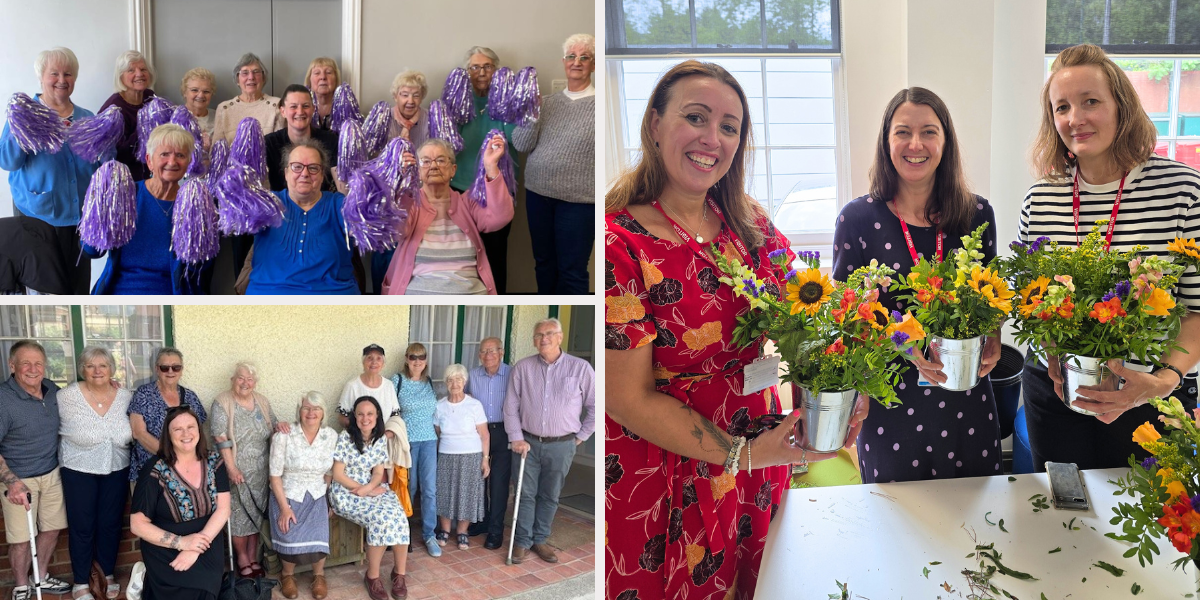
In chatting to some of our members, we discovered themed sessions are often more favourable than open chat sessions as it takes the service user into a more focused session, whether it be craft activities, gardening, floristry or cheerleading.
Becky Newton and Nicola Zielinski-Gray from our membership team certainly enjoyed a group befriending session with B:friend in Sheffield a few months ago.
Nicola commented:
“The session was lively; it had several volunteers in the room and seeing how groups connected was wonderful in a non-pressurised environment”
What are the benefits of group befriending?
Our vision at Befriending Networks is of a society where quality befriending support is available to everyone who needs it, and the importance of meaningful connection is recognised.
It can benefit anyone who is seeking social connection, including:
- Older adults
- People living with health conditions
- Carers
- Neurodivergent individuals
- Young adults experiencing isolation
- Anyone wanting a gentle, low-pressure social connection
There are many benefits to group befriending:
Mental Health & Wellbeing Benefits
- Reduced stress and anxiety
- Boosts mood through regular positive interactions
- Provides a safe space to talk and be heard
Communication & Social Skills
- Helps people who find one-to-one interactions intense
- Improved listening and interpersonal skills
- Practice speaking in a group setting
Emotional & Social
- Reduced loneliness
- Increased sense of belonging
- Confidence building through gentle social exposure
- Opportunities to form friendships at a comfortable pace
Practical & Lifestyle Benefits
- Routine and structure
- Discovery of new interests and hobbies
- Increased community participation
- Opportunities to signpost to other services
Examples of group befriending
We have been chatting with some of our members who shared how they approach group befriending activities within their projects.


St Martin’s provides a variety of groups and activities in their centre. Some are specific and activity-based – for example, various exercise classes, art classes, and a meditation group – while others are purely for social interaction and companionship. They hold a Memory Tea twice monthly, which is attended by a mixture of people with memory issues and their carers. The weekly ‘In Good Company’ group is all about coming together for a cuppa and a chat, and there is always an activity for people to try if they want to.
Yvonne Shanley , the Befriending and Wellbeing Manager says:
“Our Centre provides a warm and welcoming place to come together and is a hub of the local community. We also have a Coffee Shop so people can come in just for a cuppa too. Lovely conversations are struck up over a cup of tea and a scone and people find they have lots of things in common as most live locally.
“However, the groups give people an opportunity to come together with a common interest and share their ideas and experiences and learn from and support each other. The activities we provide spark conversation and give people a shared focus – important if a person feels they don’t have much to contribute – the power of laughter and coming together to try something new is so nice to see and hear as people encourage and support each other.”
In thinking about the difference between group and 1:1 support, Yvonne commented:
“The range of personalities involved – the variety of interests to cater for. Managing the dynamics of a group – making sure everyone is made to feel welcome and involved. Avoiding ‘cliques’ developing. Keeping everyone happy!”
Yvonne says her favourite thing about group befriending is “observing different people engage with and spark off each other”.

Bright Futures supports young people aged 5-24 who suffer from a mental health condition or physical illness. Tara Connelly, their Programme Manager, told us a little bit about their social clubs:
“Our Social Clubs provide a group befriending dynamic. Many young people miss the peer-to-peer interactions of a traditional classroom. These clubs provide a setting where participants can chat with others in their own age group, supported by a Bright Futures team member.
Young people describe the group experience as relaxing, mindful, and interesting. It is a space to be creative and engaging, where the focus remains on trying new activities and getting to know different people. The greatest benefit of these groups is the realisation that they are not alone. Sharing a craft or a conversation creates a “pocket of normality” that builds the social confidence necessary for an eventual return to education. “
b:friend
Operating in South Yorkshire, North Derbyshire and Mid Nottinghamshire
View in our directory


At b:friend, their mission is to create meaningful connections between people and communities. They match volunteers with isolated older neighbours for a cuppa and a chat each week, with the aim of creating long-lasting friendships. Along with the 1:1 befriending, they deliver weekly Social Clubs aimed at those older in age but younger at heart. Aside from the chance to meet new people and make friends, many of the older neighbours attend clubs because b:friend offer something very different to the stereotypical coffee mornings and bingo sessions. No two weeks are the same at a b:friend Social Club, one week attendees might be axe-throwing, the next they’re shaking up mocktails. The older neighbours love trying something new each week, it helps get people chatting and often sparks a lot of laughter!
One of the neighbours that attends their group activities said, “If I didn’t attend b:friend I would hardly see anyone. A usual day out for me is a day at the hospital. I have made lots of friends and I feel a lot happier.”
Collette Bunker, the CEO of b:friend told us:
“For me, the biggest difference I see between our 1:1 and group support is fun. Our 1:1 befrienders are a lifeline to the most isolated individuals in our community, often forming deep bonds where both sides benefit. Don’t get me wrong, our 1:1 friendships have fun too – but our clubs are all about connecting people through activities that we can all have a laugh about. We really test the limits of our imagination to allow people to try things they never thought they would get chance to in later life. It’s a big deal to walk into a room full of new faces but it’s always wonderful to see how quickly new members come out of their shells and grow in confidence when they’re encouraged to get involved with a bit of cheerleading or graffiti art.”
Looking for support in running group or 1:1 befriending? Explore our free networking and resources, or join our membership for 1:1 support and exclusive benefits.
A huge thank you to our members who contributed to this article. You can find out more about their projects in our directory: